Getting Started with Trezor.io/start: A Beginner's Guide to Secure Crypto Handling
In the fast-paced world of cryptocurrencies, security is paramount. Whether you're a newcomer eager to dip your toes into trading or an experienced user looking to streamline sending and receiving digital assets, Trezor offers a robust solution. Trezor.io/start is your gateway to setting up one of the most trusted hardware wallets available. This guide walks you through the essentials, helping you manage crypto with confidence, including trading, transactions, price alerts, and beyond. Let's dive in and explore how Trezor can empower your crypto journey.
What is Trezor and Why It Matters for Crypto Enthusiasts
Trezor is a hardware wallet designed to keep your cryptocurrencies safe from online threats. Unlike software wallets that store keys on your computer or phone, Trezor keeps your private keys offline, making it nearly impossible for hackers to access them remotely. Launched by SatoshiLabs, Trezor has built a reputation for reliability since its inception in 2014.
For individuals interested in trading, sending, and receiving crypto, Trezor stands out because it integrates seamlessly with various platforms. You can connect it to exchanges for secure trading without exposing your keys. Price alerts? Trezor Suite, the companion app, allows you to monitor market fluctuations right from your dashboard. Plus, it's user-friendly, even for those new to blockchain technology. Imagine having peace of mind knowing your Bitcoin, Ethereum, or altcoins are protected while you actively engage in the market.
Security features like PIN protection, passphrase support, and recovery seeds ensure that even if you lose your device, your funds remain recoverable. Trezor supports over 1,000 cryptocurrencies, making it versatile for diverse portfolios. If you're tired of worrying about phishing attacks or malware on hot wallets, Trezor.io/start is the perfect entry point to elevate your crypto management game.
Step-by-Step Setup Guide Using Trezor.io/start
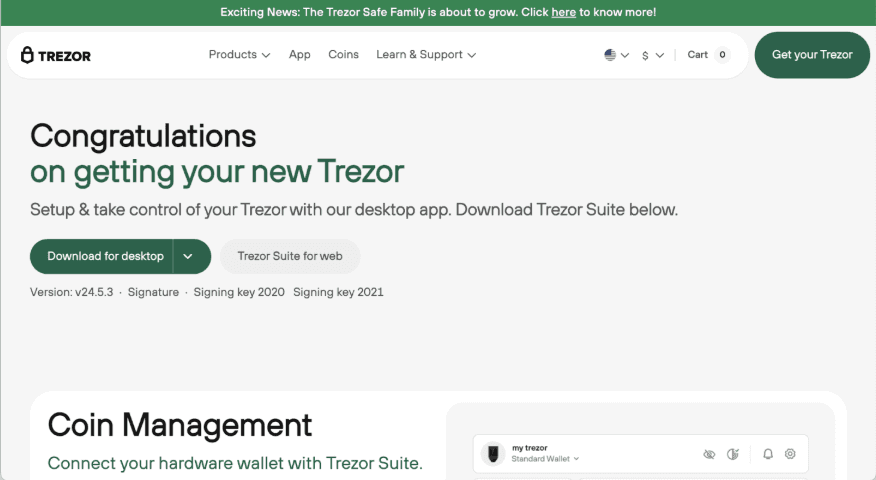
Getting started couldn't be simpler. Head to Trezor.io/start, which serves as the official setup portal. First, unbox your Trezor device—models like Trezor Model T or One are popular choices. Connect it to your computer via USB, and the website will guide you through the process.
Step one: Install Trezor Bridge or use WebUSB for Chrome browsers. This establishes a secure connection. Next, the site prompts you to create a new wallet or recover an existing one. Choose "Create New" if you're starting fresh. The device will generate a 24-word recovery seed—write this down on paper and store it safely; it's your lifeline if anything goes wrong.
Set a strong PIN on the device itself to prevent unauthorized access. For added security, enable a passphrase, which acts like an extra layer of encryption. Once set up, download Trezor Suite from the official site. This desktop app is where the magic happens: it lets you view balances, send/receive funds, and more.
The entire process takes about 15-20 minutes. Trezor.io/start ensures everything is straightforward, with clear instructions and troubleshooting tips. Remember, always verify the URL to avoid fake sites—bookmark it for safety.
Sending and Receiving Crypto Securely with Trezor
One of Trezor's core strengths is facilitating seamless transactions. To receive crypto, open Trezor Suite, select your cryptocurrency, and generate a receiving address. Share this address with the sender—it's public and safe to distribute. Transactions confirm on the blockchain, and you'll see the funds appear in your wallet almost instantly, depending on network congestion.
Sending is just as easy. Enter the recipient's address, amount, and any memo if required (like for XRP). Confirm the details on your Trezor device screen—this physical verification prevents man-in-the-middle attacks. Approve with your PIN, and voila, the transaction is broadcasted.
For those who trade frequently, Trezor integrates with services like Exodus or third-party apps via WalletConnect. This means you can send funds directly to exchanges without compromising security. No more copying private keys or risking exposure. If you're dealing with high volumes, Trezor's batch transaction feature saves time and fees.
Price alerts tie into this nicely. In Trezor Suite, set notifications for specific coins. Get emails or app alerts when Bitcoin hits $50,000 or Ethereum dips below a threshold. This keeps you informed without constant monitoring, ideal for busy traders.
Trading Crypto Using Trezor: Tips and Best Practices
Trading with Trezor adds a layer of security that's hard to beat. While Trezor itself isn't an exchange, it pairs perfectly with platforms like Binance, Kraken, or decentralized ones like Uniswap. Connect your wallet via the exchange's integration—your keys stay on the device, never shared online.
For spot trading, fund your exchange account by sending from Trezor. Execute trades, then withdraw profits back to your hardware wallet for safekeeping. Futures or margin trading? Use Trezor to hold collateral securely. Always enable two-factor authentication on exchanges and use Trezor's confirmation for withdrawals.
To optimize, monitor market trends with built-in charts in Trezor Suite. Set price alerts to catch opportunities—get notified when altcoins like Solana surge. Diversify your portfolio across supported assets, and use Trezor's labeling system to track trades for tax purposes.
Common pitfalls to avoid: Don't rush setups; double-check addresses to prevent sending to wrong chains. For cross-chain trades, ensure compatibility—Trezor supports ERC-20 tokens and more.
Advanced Features: Price Alerts, Portfolio Tracking, and More
Beyond basics, Trezor offers tools that enhance your crypto experience. Price alerts are customizable—set thresholds for buys/sells, and receive real-time updates. This is invaluable for volatile markets, helping you react swiftly without glued to screens.
Portfolio tracking in Trezor Suite provides a holistic view: see total value, asset allocation, and historical performance. Integrate with accounting software for effortless tax reporting. For privacy enthusiasts, CoinJoin mixes transactions to obscure origins.
Trezor also supports staking for proof-of-stake coins like Cardano—earn rewards while keeping assets secure. NFT storage? Yes, manage your digital collectibles safely. Firmware updates via Trezor.io/start keep your device current against emerging threats.
Community features include forums and support tickets for quick help. If you're into DeFi, connect to protocols like Aave or Compound directly.
Wrapping Up: Why Trezor.io/start is Your Crypto Ally
In summary, Trezor.io/start opens the door to a secure, efficient way to handle cryptocurrencies. From effortless setup to advanced trading and alerts, it's tailored for users who value safety without sacrificing functionality. Whether sending Bitcoin to a friend, trading Ethereum on the go, or setting alerts for market dips, Trezor empowers you.
Adopting Trezor means joining a community focused on sovereignty over your assets. Start today—visit Trezor.io/start and take control. With its blend of security and usability, it's more than a wallet; it's your partner in the crypto world.